
ZIP 33065
East Coral Springs
Near Mullins Park, eastern Coral Springs
See ZIP 33065Roof pressure washing here means a low-pressure soft wash with a roof-safe cleaner. Fast Pro removes dark algae streaks, mildew, and moss from shingle, tile, flat, and metal roofs without stripping the surface, and clears and flushes your gutters in the same visit.
ZIP codes we serve in Coral Springs
Serving Coral Springs, FL homeowners. 6+ years of experience. 450+ jobs completed. Last updated .
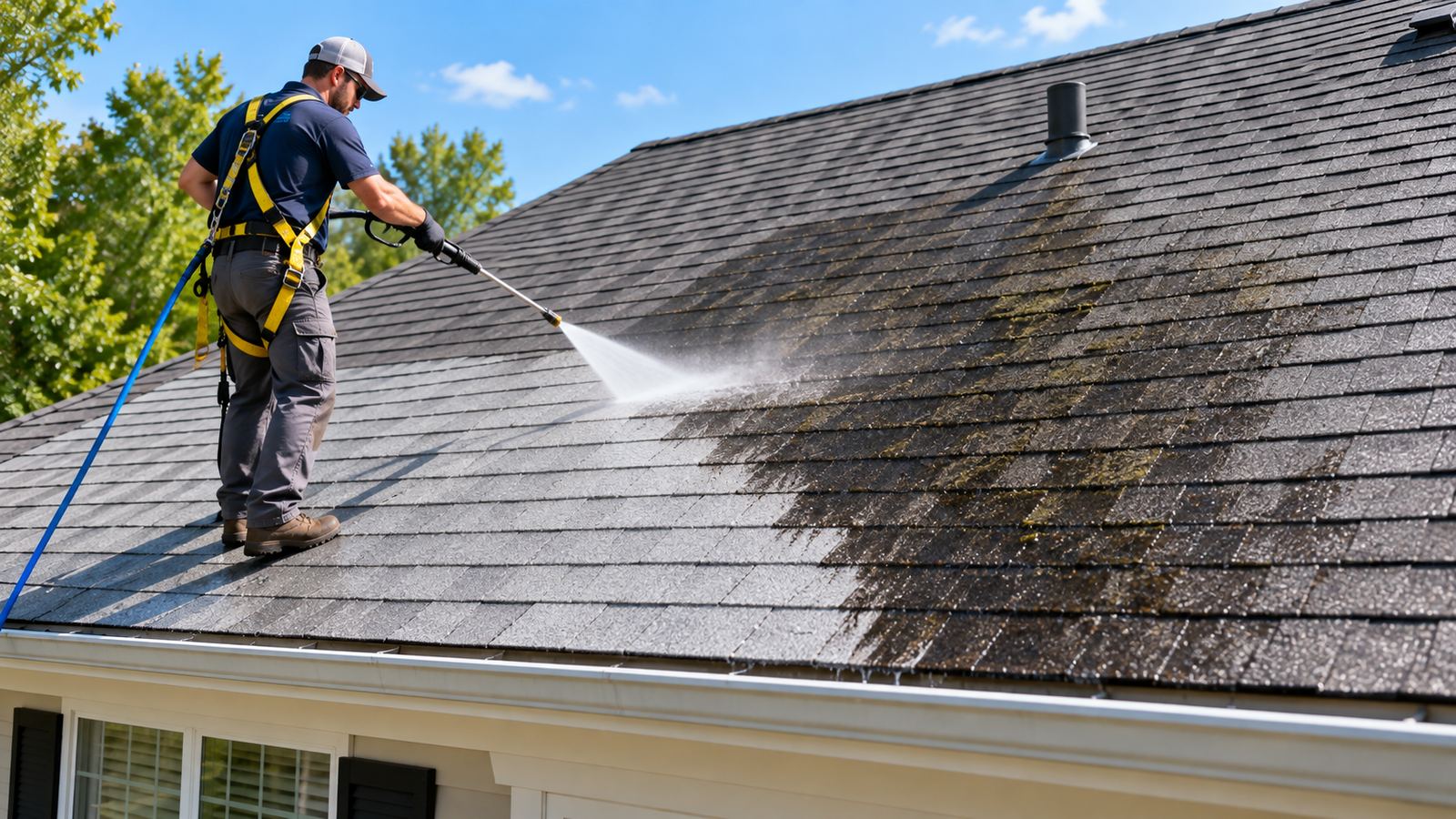
Every roof wash includes
Soft wash onlyRoof pressure washing is what most Coral Springs homeowners search for first, and the city's mostly concrete tile roofs, built across decades of consistent planned development, respond well to a soft wash.
A Coral Springs roof is almost always concrete tile, a reflection of how consistently the city was developed under its original master plan, with some shingle on older sections and newer flat or metal roofing on recent construction. None of it should see a pressure washer.
Heat and humidity grow algae and mildew on every roof here, and proximity to one of the city's planned lakes or canals can speed that up beyond what a drier, more inland lot would show. Tile stays far under the roughly 1,200 psi ceiling tile manufacturers recommend, with a concrete-compatible cleaner and footing kept to the overlap points.
We clean roofs. Coral Springs' strict building and design standards mean any change beyond cleaning, like a different tile color or profile, is worth confirming with the city first. Repairs and re-roofing belong to a licensed roofer, and Coral Springs falls inside the High-Velocity Hurricane Zone shared with Miami-Dade, so roofing products here need a Miami-Dade Notice of Acceptance even though the city is in Broward County.
A roof backing onto one of the city's planned lakes often needs washing sooner than a similarly aged roof on a drier street, since the extra humidity there gives algae a head start that sun exposure alone doesn't fully offset.
Coral Springs roofs are mostly concrete tile, consistent with decades of planned construction across the city, with shingle on some older sections and newer flat or metal roofing on recent development. Heat and humidity grow algae and mildew on all of them, often faster near the city's lakes and canals than on a drier lot farther from water. Tile pressure stays far under the roughly 1,200 psi limit tile manufacturers set, cleaned with a concrete-compatible product and footing kept to the overlap seams.
Coral Springs is inside the High-Velocity Hurricane Zone, which covers Miami-Dade and Broward counties both, and roofing products installed here need a Miami-Dade Notice of Acceptance even though the city is in Broward. We clean roofs. Repairs and re-roofing belong to a licensed roofer, and the city's strict exterior standards mean any visible change is worth confirming with the city before work begins. Roofs closest to the city's lakes and canals typically need washing sooner than roofs on drier, more inland streets.
The right method depends on the roof material. We match the cleaner and the footing to it.
| Roof type | What grows or builds up | How we clean it |
|---|---|---|
| Asphalt shingle | Dark algae streaks, moss, and lichen | Roof-safe cleaner, low-pressure rinse, never a pressure blaster |
| Concrete or clay tile | Dark algae, mildew, and moss in the valleys | Soft wash, careful footing, and a rinse that follows the tile pattern |
| Flat or low-slope roof | Mildew, dirt film, and standing-water stains | Low-pressure wash with a membrane-safe cleaner, drains cleared |
| Metal | Dirt film, mildew, and oxidation | Gentle wash and rinse that will not scar the coating |
On asphalt shingles the dark streaks are usually a cyanobacterium called Gloeocapsa magma, which feeds on the limestone filler in the shingle and spreads on the wind, as the Asphalt Roofing Manufacturers Association explains. Warm, humid, shaded roofs grow it fastest.
This is the question that decides whether a roof cleaning helps your roof or hurts it.
| On your roof | High-pressure blasting | Our low-pressure soft wash |
|---|---|---|
| Shingles | Knocks off protective granules. | Granules stay in place. |
| Algae and mildew | Roots stay and streaks return sooner. | Cleaner kills growth at its base. |
| Water intrusion | Can force water under the roof surface. | Gentle flow that follows the way rain runs. |
| Tile, flat, and metal | Can chip tile and scar coatings and membranes. | Safe on tile, flat roofs, metal, and shingle. |
We use a soft wash on every roof. The cleaner does the work, and the water only carries it off. That is slower than blasting, and it is the reason your roof comes out of it in one piece.
Gutters first, roof second, gutters again at the end.
We check the material, the pitch, the condition of the surface, and the safest way up. Loose or damaged areas get flagged before we start.
Debris comes out first so the rinse has a clear path and the roof does not wash dirt into a full trough.
Shrubs and flower beds under the roof line are wet down and covered.
The cleaner goes on at low pressure and sits long enough to kill the growth at its base.
A low-pressure rinse carries the cleaner and the dead growth down and off, the way rain would.
Runoff from the roof leaves through the gutters and downspouts, so we flush them a second time.
You get before and after photos and a note on anything we saw that needs a roofer.
Streaks fade as the cleaner works. The rinse only carries them off.
The same roof, photographed from the same spot before and after.
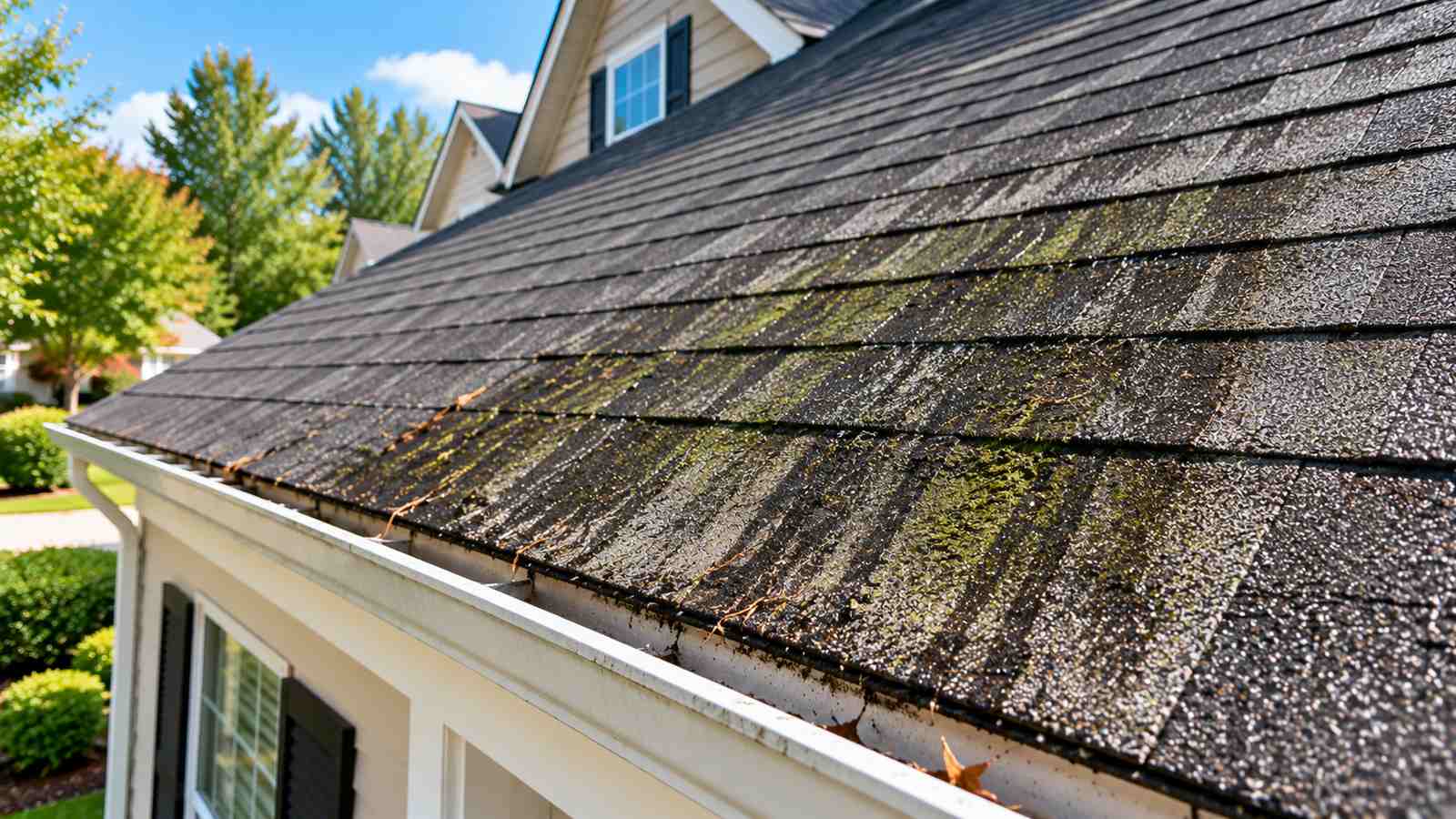
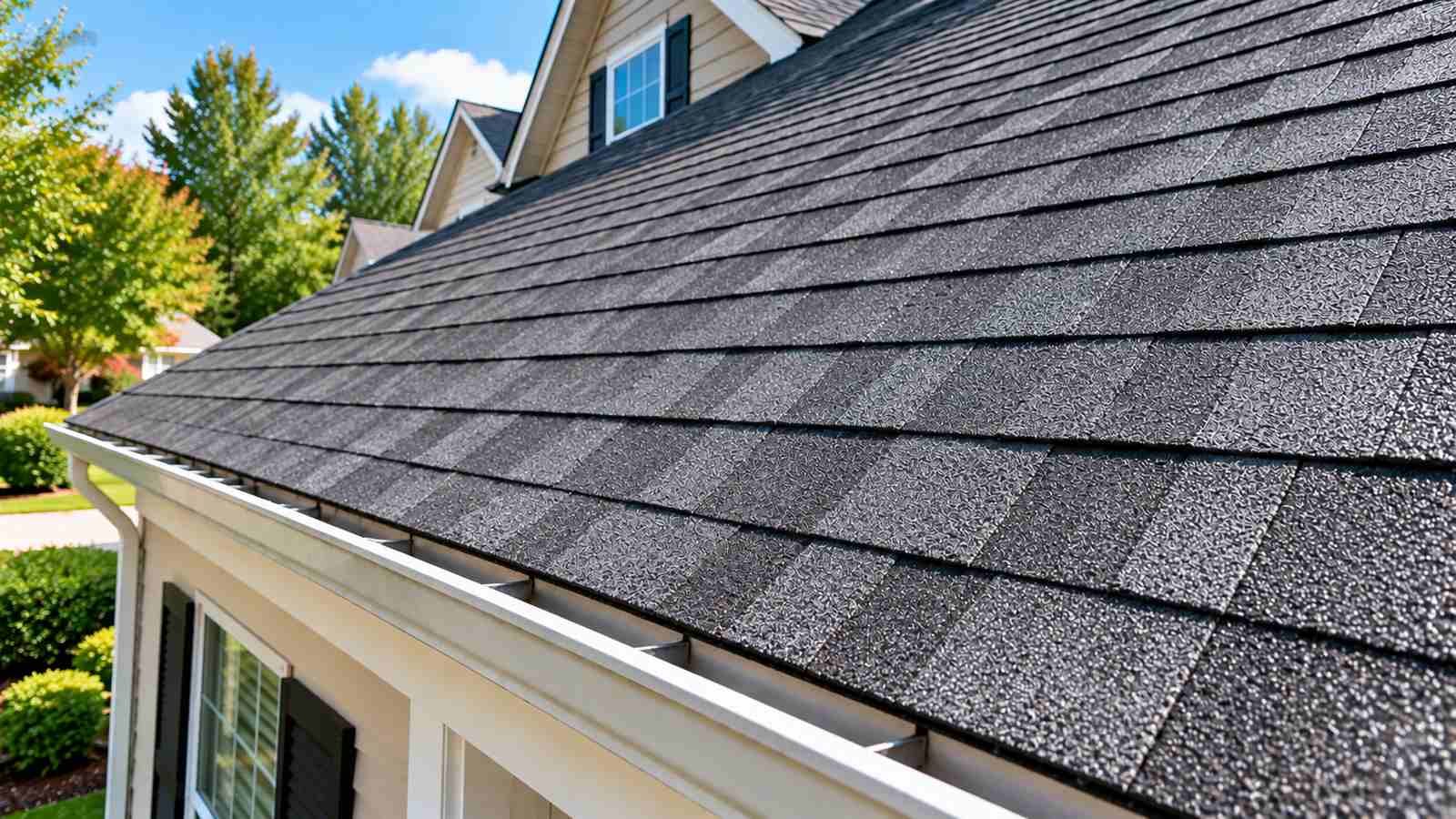
Roofs are dangerous places. We use the right ladder angle (see NIOSH guidance), we walk only on surfaces that can take it, and we never use high pressure. If a roof is too steep, too fragile, or too damaged to wash safely, we say so.
We clean roofs. We do not repair or replace them. When we find damaged roofing, we photograph it and tell you plainly, so a licensed roofer can take it from there.
Pick your ZIP code to see the neighborhoods we cover, or call and we will confirm your street.
East Coral Springs
Near Mullins Park, eastern Coral Springs
See ZIP 33065Central Coral Springs
Central Coral Springs
See ZIP 33071North Coral Springs
Northern Coral Springs
See ZIP 33076South Coral Springs
Southern Coral Springs, near the Sawgrass corridor
See ZIP 33067Not sure we cover your ZIP code? Call us at (813) 856-2726.
It depends on the roof size, material, and how close the home is to one of the city's lakes or canals. Give us your address and we'll price the work over the phone.
The price comes down to the feet of gutter, how many stories the home is, and how much buildup has accumulated. Give us a call with your address for a phone quote.
Early May is the visit to prioritize, since it lands right before the wet season starts. A second round between October and December, after hurricane season, handles the rest.
Yes. The extra humidity near the city's planned waterways can speed up algae growth and gutter streaking compared to a drier, more inland lot.
We cover the city end to end, across its roughly 24 square miles, from the areas near Mullins Park to the neighborhoods closest to the city's lakes and canals.
Routine cleaning doesn't change the exterior, so it generally isn't something the city's design standards apply to. Anything that changes how the roof or gutters look is a different matter.
Often, yes. The extra humidity near the water speeds up both gutter streaking and roof algae growth compared to drier inland streets.
Yes, the same as every other part of the city we cover. Give us your street and a nearby cross street and we'll take it from there.
Routine cleaning doesn't change the roof's appearance, so it generally isn't something the city's design standards apply to.
Often, yes. The extra humidity near the water can speed up algae growth compared to a drier, more inland roof.
Routine cleaning that doesn't change the roof's appearance generally isn't something the city's design review applies to; we can confirm your specific property if you're unsure.
Call and tell us the roof material and what you see. We quote by phone and find a day that works.
Call (813) 856-2726